

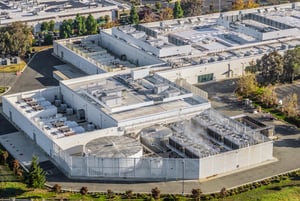
For data centers, downtime is not an inconvenience, it is a line item measured in thousands of dollars per minute. Industry estimates place downtime near $7,900–$9,000[1] per minute, and typical outages can quickly reach six- and seven-figure losses. In that context, the roof is not a passive part of the building enclosure, it is a front-line risk-control system.
 By: Jennifer Stephan, RRC, CDT, ICC Building Inspector
A resilient roof is a high-ROI safeguard that protects uptime, equipment, and service continuity. Data centers carry a different risk profile than typical facilities: even small roof issues can trigger financial loss, reputational damage, and customer impact. That is why leading operators and investors should evaluate roofing through the lens of risk, resilience, and lifecycle value – not lowest cost of installation.
Resilience is not defined by one product or detail. Resilience is the result of intentional planning, robust design, disciplined execution, and proactive maintenance.
Materials, design, and installation determine whether the roof system can meet operational demands and withstand environmental stress. For mission-critical facilities, a resilient roof system functions like insurance: it lowers outage probability, reduces event severity, and shortens recovery time.
Modern data centers house extraordinary value. Capital investments ranging from hundreds of millions to more than $1 billion often sit directly below the roof system. Water intrusion, wind uplift, hailstorms, or fire exposure can cause equipment damage, emergency shutdowns, contractual penalties, and reputational harm.
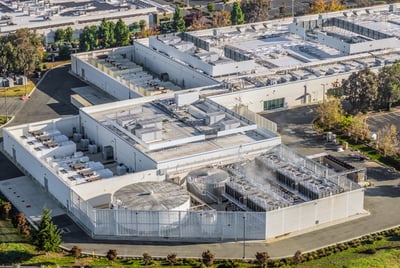
The financial exposure extends well beyond repair costs. Other financial risks include amplified costs across every connected system: direct repair expenses spike during extreme weather; collateral damage spreads to hardware, cabling, containment, and raised floors; contractual penalties balloon; cost for emergency deployment of temporary protection or mobile cooling; and soft costs accumulated through staff disruption, vendor coordination, and audit documentation.
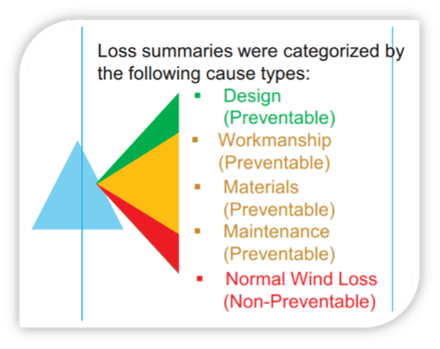
Post-event investigations by Roofing Industry Committee on Weather Issues[2] (RICOWI), documented an average of $21.8 billion dollars in insured property losses in a ten-year study period. Investigations revealed most roof losses are preventable, originating at predictable weak points tied to design, workmanship, material selection, or deferred maintenance. As a result, design teams enhance roof system design with secondary membranes, dense cover boards, thicker or multi-ply membranes, conservative attachment, robust perimeter detailing, and early-warning tools such as electronic leak detection.
Insurers treat the roof as a primary underwriting variable. Compliance with evolving building codes, UL fire rated assemblies, Factory Mutual (FM) requirements, and edge-metal standards directly influences insurability, premiums, and business-interruption protection.
For data center operators, resilient roof design reduces lifecycle risk. The return on investment for resilient roof systems comes from fewer leaks, fewer emergency repairs, longer service life, and less disruption. For data centers, the roof is a financial asset that protects people, processes, equipment, capital, and credibility.
Designing for Resilience: Codes, Climate, and Performance
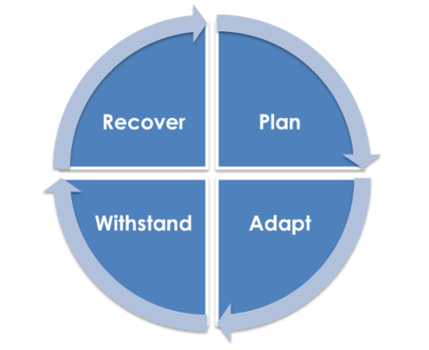
ASTM International E3341[3] defines resilience as the ability to plan, adapt, withstand and recover from disruption, while maintaining intended function. Applied to data center roofs, that translates to anticipating hazards, adapting to climate and operational change, withstanding wind, hail, fire, traffic, and chemical exposure, and restoring performance quickly through repairable assemblies.
Extreme weather is reshaping building codes, performance expectations, and roof design. Recent updates include American Society of Civil Engineers (ASCE), the industry foundation for structural and civil engineering codes and calculations, publication 7-22 adding tornado wind provisions for Risk Category III and IV buildings, ANSI/SPRI ES-1 [4] updated edge-metal requirements, expanded fire testing, and FM hail zones and impact criteria. Given the cost of downtime and the sensitivity of in-house equipment and processes, data centers should be treated as critical facilities and designed for both expected and low-probability hazards. Redundancy, tested assemblies, and conservative design reduce roof-system failures and downtime.
Thermal performance supports resilience. Higher R-value assemblies reduce mechanical load, stabilize interior conditions, and provide tolerance during abnormal operating events. The return on investment in thermal performance comes back in operating efficiency.
Resilient design must account for other usage of the rooftop space including foot traffic for HVAC maintenance, carts, storage, and chemical exposure, so the system performs under real operating conditions. Roof design needs to account for future alterations and tenant improvements by supporting solar, and increased access without forcing premature replacement. Resilient roof design also accounts for extended service life, designing a roof system which can remain in place and be recovered, eliminating the cost of roof removal and preventing materials from ending up in a landfill.
Resilience does not end in the roof design, it is delivered in construction, supervision, and the roof asset management program. In active data centers, roof replacement and repair projects introduce operational risk. Poor project execution can allow dust, debris, fumes, or temporary water exposure to disrupt operations with costly consequences.
Because labor often dominates total roofing cost, material upgrades can be a good investment and even small upgrades can deliver big returns. Enhancements such as cover boards, thicker or multi-ply membranes, upgraded attachment, and maintainable systems tend to provide unrealized returns. These choices improve repairability, extend service life, and enable planned recover strategies (such as liquid-applied membranes and recover systems) that can add 20+ years of service life when executed correctly. Preventive maintenance, inspections, monitoring, and early repairs preserve resilience over the roof’s lifecycle.
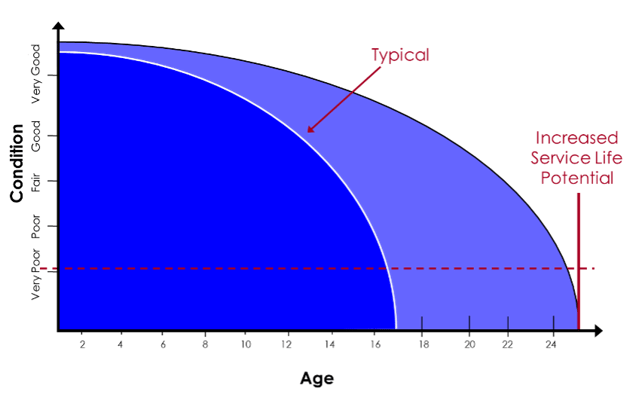
Built in from design through asset management, roof resilience becomes a stabilizing asset—protecting uptime, capital, insurability, and long-term operating confidence.
Making Resilience Stick
A documented case study makes the business case clear: a global pharmaceutical company treated roofing as a facility expense issue until a roof failure triggered a production shutdown and a multimillion-dollar recall. The link between roof performance and operational reliability became undeniable. In a Ponemon Institute study, 91% of respondents reported at least one unplanned outage related to roof performance in the prior 24 months – underscoring how common disruptions are and why prevention outperforms reaction.
Leadership responded by launching a data-driven Roof Management Program incorporating routine evaluations, annual assessments, centralized data visibility, and proactive capital planning across their entire portfolio. The results were significant:
-
80% fewer leaks
- Reduced unplanned shutdowns
- 5–10 years of added asset life
Pharmaceutical manufacturing and data center operations are not identical; they share common requirements: mission critical facilities with tightly controlled environments and zero tolerance for disruption. Data center operators serve clients who treat uptime, redundancy, and resilience as baseline expectations. A publicized outage – especially one tied to a preventable building envelope failure – erodes confidence and can drive churn or lost contracts. The Uptime Institute's Annual Outages Analysis (2023) [5] found that more than two-thirds of outages cost $100,000 or more, reinforcing how consequential each event can be.
Operators who invest in resilient roofing demonstrate the same rigor they apply to backup power and redundant cooling – supporting mission-critical performance expectations and Tier-level positioning.
A resilient data center roof pays for itself by protecting operations, defending capital, and preserving client trust. Resilience reduces risk, often an unrealized cost. It is a reliability investment with measurable ROI – the roof is the foundation of resiliency and data center uptime from the top down.
DOWNLOAD 
Reference
[1] www.datacenterknowledge.com/outages/study-data-center-downtime-costs-7900-minute
[4] https://www.spri.org/standards/