

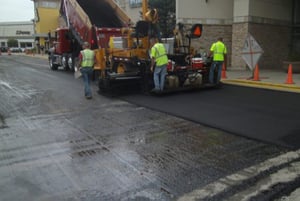
Whether a single plant or a national distribution network, managing pavement assets in a food and beverage facility follows the same fundamental process. The difference lies in operational intensity, safety requirements, and the cost of disruption.
 By Troy Kaiser
In food and beverage environments, pavement is not just an exterior asset, it directly impacts:
- Truck flow and dock efficiency
- Sanitation and drainage
- Employee and pedestrian safety
- Regulatory and audit readiness
Pavement systems, both asphalt and concrete, represent a significant portion of a site’s asset value; the cost to replace these assets is often far greater than expected. More importantly, pavement failures can disrupt operations, damage products, delay shipments, and introduce safety or compliance risks.
A proactive, program-based approach to managing pavements where each site is evaluated every three to five years is essential. This aligns with the typical lifecycle of well-constructed pavement systems and helps prevent operational interruptions.
Evaluation
The first step in creating a five-year pavement management plan is to inspect and evaluate existing pavements.
For food and beverage facilities, this evaluation should go beyond surface condition and consider:
- High-traffic areas (truck routes, loading docks, yard storage)
- Drainage performance (critical for sanitation and standing water prevention)
- Washdown areas and environmental exposure
- Pedestrian routes and safety zones
- Regulatory considerations (e.g., ADA, safety compliance)
Pavements should be rated and prioritized based on both condition and operational criticality. A structured pavement rating system, such as the Pavement Condition Index (PCI), should account for:
- Surface distresses
- Drainage and water flow
- Load-related wear from heavy truck traffic
Additionally, all supporting components including curbs, drainage structures, striping, and signage, should be evaluated, as they are integral to safe and efficient operations.
Safety-related issues, especially in high-traffic or employee-access areas, should be identified for immediate attention.
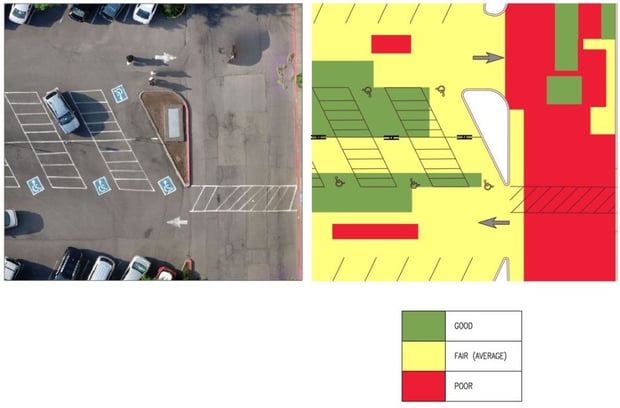
Pavement conditions from an evaluation are documented for analysis
Prioritization
Once evaluated, pavements should be grouped into condition categories to guide decision-making:
- Good / Very Good Condition - Require minor repairs and preventive maintenance. These areas are often critical to protect, especially in high-traffic production or distribution zones.
- Fair / Moderate Condition - Still serviceable but beginning to decline. These are often the most strategic investment opportunities where resurfacing or overlays can extend life and reduce disruption.
- Poor / Failing Condition - Likely beyond cost-effective repair. In food and beverage environments, these areas can pose operational and safety risks, particularly in truck dock and yard areas.
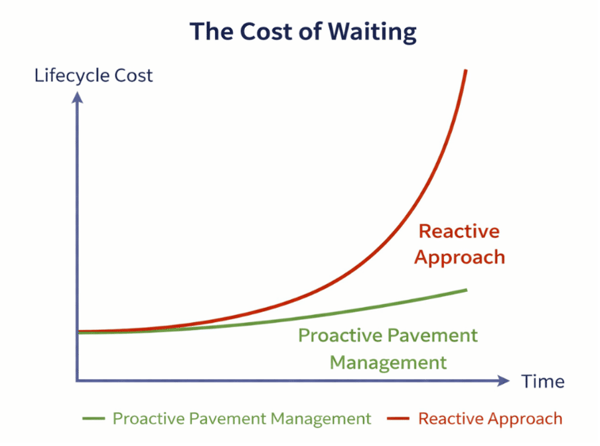
Understanding the pavement deterioration curve is critical:
- Pavement deterioration accelerates over time
- Costs increase significantly as failures expand
For facilities running tight production and distribution schedules, missing the optimal intervention window can mean forced, unplanned capital projects and increased disruptions to operations.
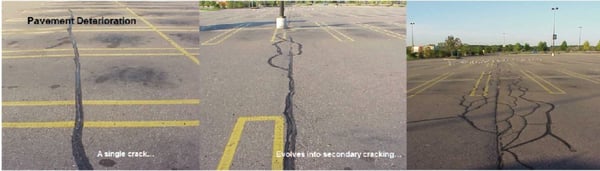
Evolution of an asphalt paver joint crack.
Budgeting
Preventive Maintenance:
It is natural to focus on the worst pavements first, but this is rarely the most effective strategy.
In food and beverage operations, the highest ROI comes from:
- Protecting actively used, high-functioning areas
- Maintaining truck routes and dock access points
- Preventing water infiltration and structural degradation
Year one should prioritize:
- Crack sealing and joint sealing
- Targeted patching
- Drainage corrections
- Surface repairs in operationally critical zones
- Safety issues
These investments help avoid larger disruptions later, especially in facilities where downtime impacts production or distribution.
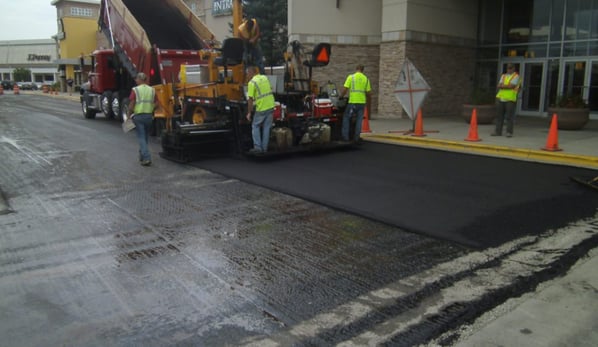
Overlays and Resurfacing
After preventive maintenance, the next priority is extending pavement life through overlays or resurfacing.
For food and beverage sites, timing is critical because:
- Work must often be coordinated around production schedules or shutdown windows
- Access to docks and yards cannot be significantly disrupted
- Delays can impact supply chain continuity
Well-timed resurfacing can:
- Protect the initial investment and restore structural integrity
- Improve drainage and cleanliness
- Extend pavement life and delay the cost/disruptions of a full reconstruction
However, delaying too long can eliminate this option and force reconstruction.
Reconstruction
Reconstruction projects should be prioritized last within the five-year framework and are often the most complex within food and beverage environments.
Considerations include:
- Phasing work to maintain operations
- Managing truck routing during construction
- Coordinating with production schedules
- Addressing underlying subgrade or drainage issues
In many cases, temporary repairs can keep pavements serviceable while reconstruction is planned strategically to minimize disruption.
Re-evaluation and Interim Program Updates
Annual reviews are recommended to:
- Identify new safety concerns
- Monitor high-traffic and high-risk areas
- Adjust plans based on operational changes
A full re-evaluation every three years is typical but may need to occur more frequently in:
- High-volume distribution facilities
- Sites with heavy truck traffic
- Facilities experiencing rapid growth or operational changes
- Facilities in areas that experience variable weather conditions
Documenting completed work and maintaining accurate records is critical for:
- Budget justification
- Capital planning
- Long-term asset management
Conclusion
For food and beverage manufacturing and distribution facilities, pavement is not just a maintenance item, it is a critical operational asset.
A well-structured pavement management plan helps:
- Protect high traffic and high value areas
- Reduce product damage
- Reduce unplanned disruptions
- Improve safety and compliance
- Create predictable, manageable budgets
- Reduce costs over the life of the pavements
By proactively managing pavement assets as part of overall facility strategy, organizations can move from reactive repairs to intentional, data-driven decision-making, ensuring both operational continuity and long-term asset performance.