

Subcontracting has become a defining trend in the roofing industry, with the National Roofing Contractors Association (NRCA) reporting that roughly 70% of residential and 40% of commercial roofing projects now involve subcontracted labor.
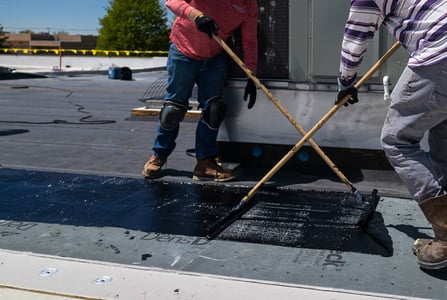 This shift affects how projects are staffed, supervised, and warranted, and it carries different implications for owners and design professionals. The change is especially significant when prime roofing contractors subcontract core roofing tasks such as tear‑off, demolition, and installation. In many cases, the subcontractor’s involvement is not disclosed, even though they are performing the work that determines the long‑term performance of the roof.
Understanding who is actually performing the work is essential. The distinction between an employee and a subcontractor influences liability, supervision, training, and warranty compliance. Subcontractors set their own hours, wages, and job choices, while employees work under the direction and control of the roofing contractor. When subcontractors are used without transparency or proper oversight, both owners and designers can face increased risk.
Several forces are driving the rise in subcontracted roofing labor. Pandemic‑related material delays pushed many skilled roofers to become independent contractors so they could move between companies and stay employed. The industry is also facing a significant shortage of qualified workers, and subcontracting allows prime contractors to take on more projects without expanding their in‑house crews. Rising insurance and workers’ compensation costs have encouraged some contractors to reduce employee headcount, shifting those expenses to subcontractors who carry their own coverage. Finally, subcontracting simply increases capacity; prime contractors can manage more work simultaneously, boosting volume and revenue.
For owners, the risks are primarily tied to contractual clarity, insurance coverage, safety compliance, on‑site supervision, and warranty eligibility. Owners often assume that the company they hired is the company performing the work, but that is not always the case. If the subcontractor is not bound to the same requirements as the prime contractor, gaps can emerge in quality, safety, or warranty compliance. Some subcontractors lack adequate insurance, which can expose owners to claims if an injury or defect occurs. Safety protocols may not be followed if the subcontractor is unfamiliar with the owner’s requirements. Owners should also insist that the prime contractor provides a qualified representative on site whenever work is performed, ensuring accountability and a clear point of contact. Warranty issues can arise if the subcontractor is not authorized by the roofing manufacturer, so owners should require confirmation that all installers are approved and trained.
Design professionals face a different set of concerns. Their responsibilities center on specification compliance, installer qualifications, communication pathways, manufacturer requirements, and site observation. Subcontractors may not have the same training or experience as the prime contractor’s employees, which can lead to deviations from the design intent. Designers often rely on the prime contractor for coordination, but when subcontractors are performing the work, communication gaps can occur. Designers should verify that all installers meet the manufacturer’s authorization requirements to maintain warranty eligibility and may need to increase site observation frequency to ensure compliance with details, sequencing, and safety expectations.
Subcontracting is now a permanent part of the roofing landscape. For owners, the priority is ensuring that subcontractors meet the same contractual, safety, and warranty requirements as the prime contractor. For designers, the focus is on maintaining specification compliance, verifying installer qualifications, and ensuring clear communication throughout the project. Subcontracting is not inherently problematic, but it requires transparency, oversight, and alignment. When owners and designers understand who is performing the work and what standards they must meet, roofing projects are far more likely to succeed.
If you are interested in learning more about the definition of a subcontractor or independent contractor, please reference the following websites:
U.S. Department of Labor
Federal Register - Independent Contractor Status Under the Fair Labor Standards Act
Misclassification of Employees as Independent Contractors

By Curt Liscum, RRC, RRO
Senior Consultant (retired)